
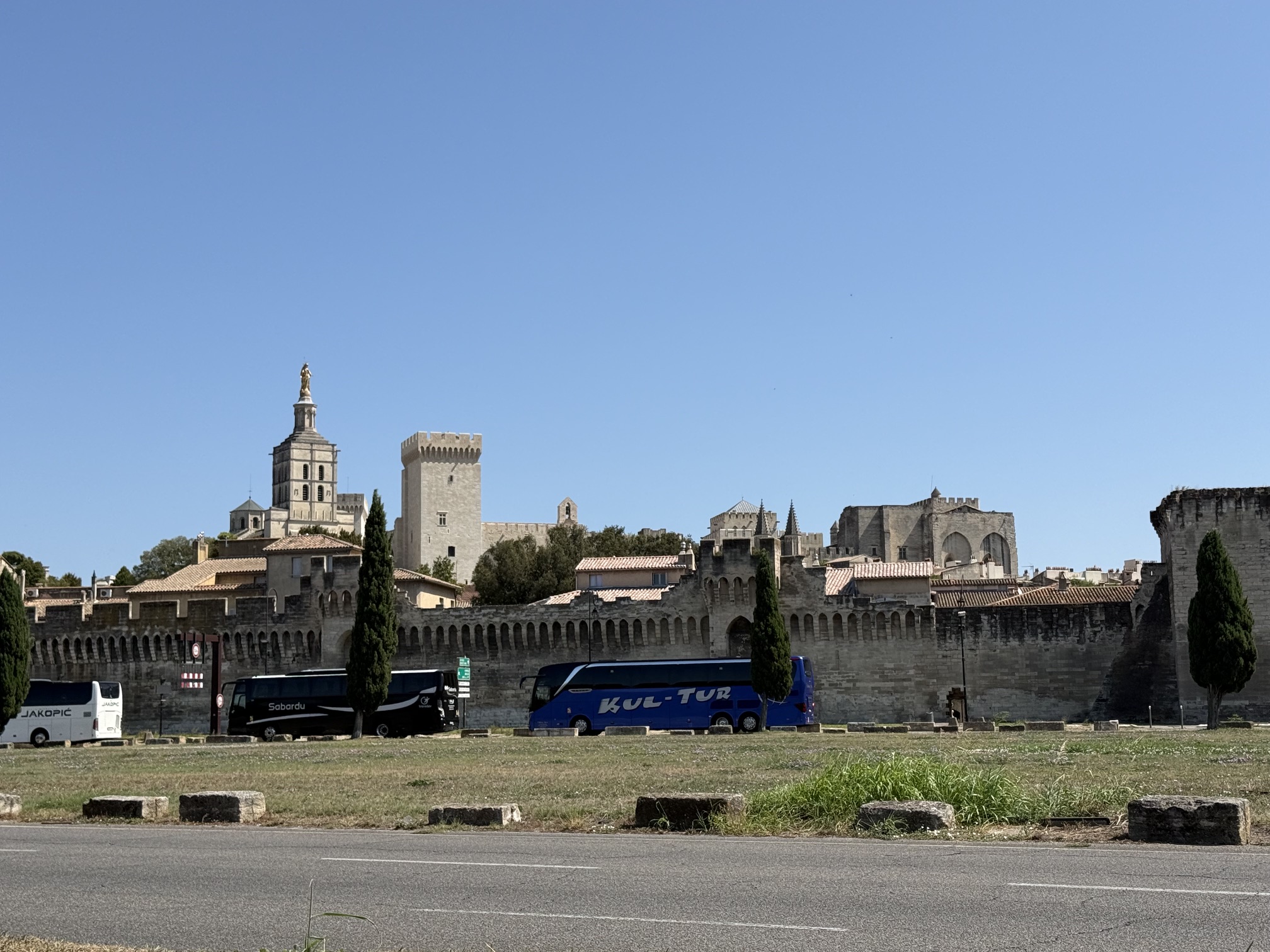
Avignon is a walled city . . . a compact and lovely little town skirted to the north and west by the Rhône and circled completely by medieval ramparts. . . .
But presently, round a curve in the city wall, the old bridge of the song came into view, its four remaining arches soaring out across the green water to break off . . . in midleap, suspended halfway across the Rhône. Down into the deep jade water glimmered the drowned-gold reflection of the chapel of St. Nicholas, which guards the second arch. Here . . . the water is still, rich with the glowing colours of stone and shadow and dipping boughs, but beyond the sandbank the slender bridge thrusts out against a tearing torrent . . . here green as serpentine, there eddying to aquamarine, but everywhere hard in colour as a stone.
Mary Stewart
Madam, Will You Talk?
I’VE BEEN HOME a little more than a month and I’m still processing our trip to the south of France. Just the phrase “the south of France” sets me dreaming, and in so many ways it was everything I had ever hoped the south of France would be.
Ancient. Beautiful. Lavender scented. Meltingly hot. Scattered with cypress trees, vineyards and two-thousand-year-old Roman ruins.
I don’t know why I’d always considered cypresses a bit boring, but the instant I landed in Provence I understood why Van Gogh painted them. There’s something magical about them, I wrote in my journal. They’re like dark blue-green arrows pointing straight up into that perfect blue Provençal sky. The pages of my journal are littered with my attempts to draw them—such a simple shape, you’d think, and yet . . .
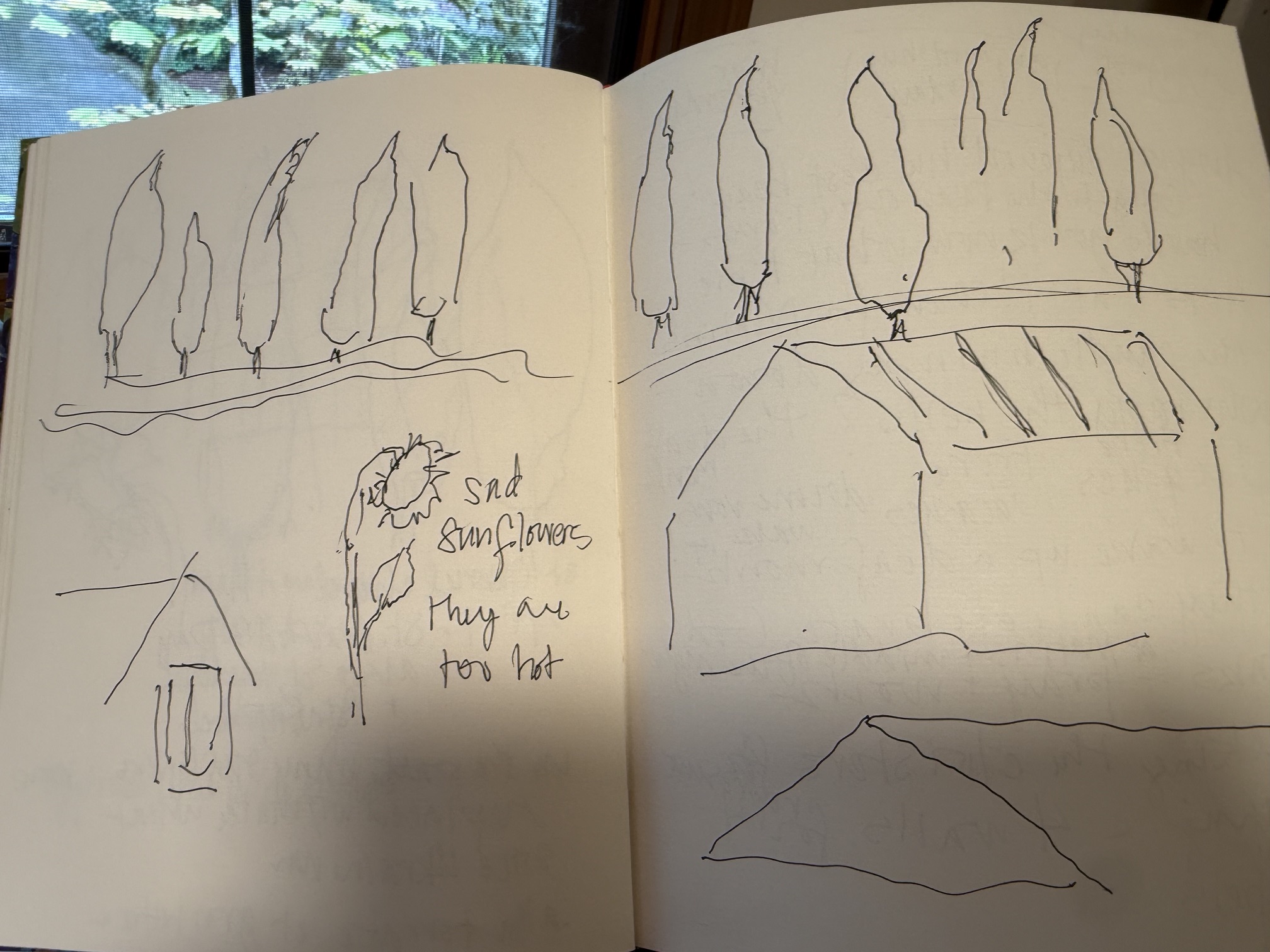
One of my many attempts to draw cypresses
Okay, so pause here because I just got sucked into an internet rabbit hole—and discovered that Van Gogh painted cypresses more than I had ever realized. Visiting Arles, where his famous yellow house was, just sealed the deal. So . . . a topic for my next post!
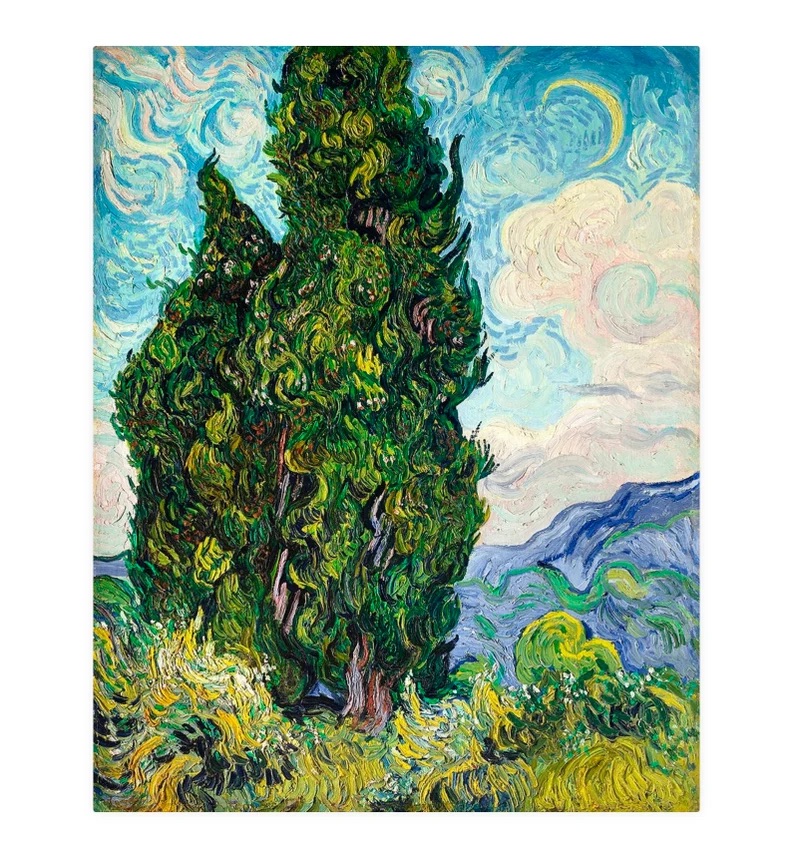
Cypresses by Vincent Van Gogh
For now, back to Avignon, a city I’ve dreamed of visiting ever since I read Mary Stewart’s Madam, Will You Talk? Right after I graduated from college, a friend and I bought two BritRail passes and traveled around the UK for five weeks. Besides the charming British cities, castles, and gardens we saw, I loved the train stations where I could buy cheap paperback copies (95p) of Mary Stewart novels. Over the years, none of them stuck with me quite like MWYT has—I still reread it every summer for that girl-having-an-adventure-in-an-exotic-place feeling I love.
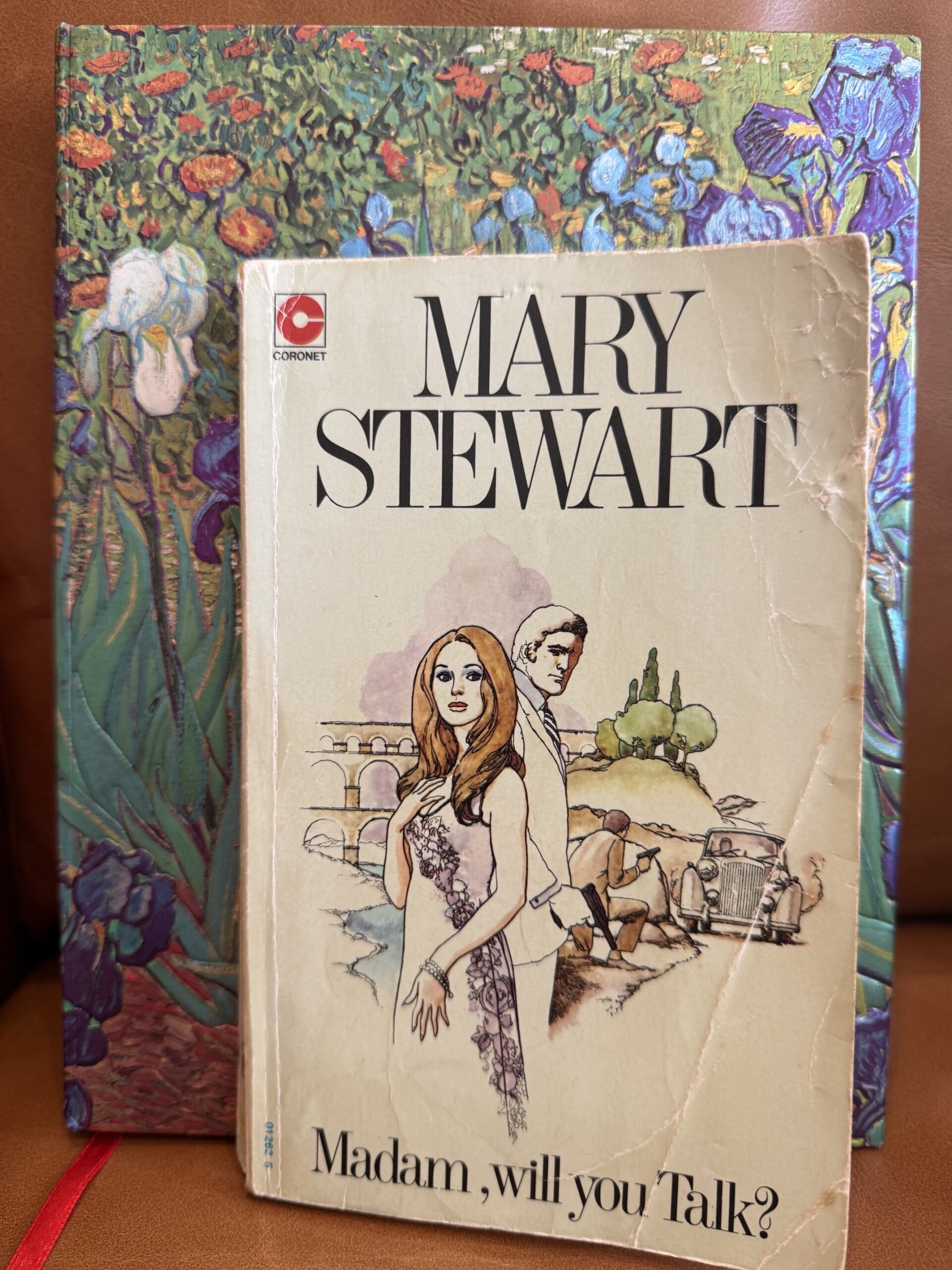
My well worn original copy of Madam from the 1980s
But Avignon—did I mention it’s a walled city? One of the few that’s survived centuries of history with its entire medieval wall intact. Walled gardens, walled cities—what is it about walled things that fascinates me so much? The sense of enclosure? A romantic idea now, but life-savingly practical when having the ability to shut out hostile invaders could mean the difference between life and death. Maybe it’s that feeling of security: here we will be safe. Certainly, having a wall between you and something you can’t see provokes curiosity and heightens the desire to find out what’s on the other side.
Our Viking cruise ship was moored on the Rhône outside the city, and I was swooning over the view of Avignon from the first moment I stepped onto our stateroom balcony.
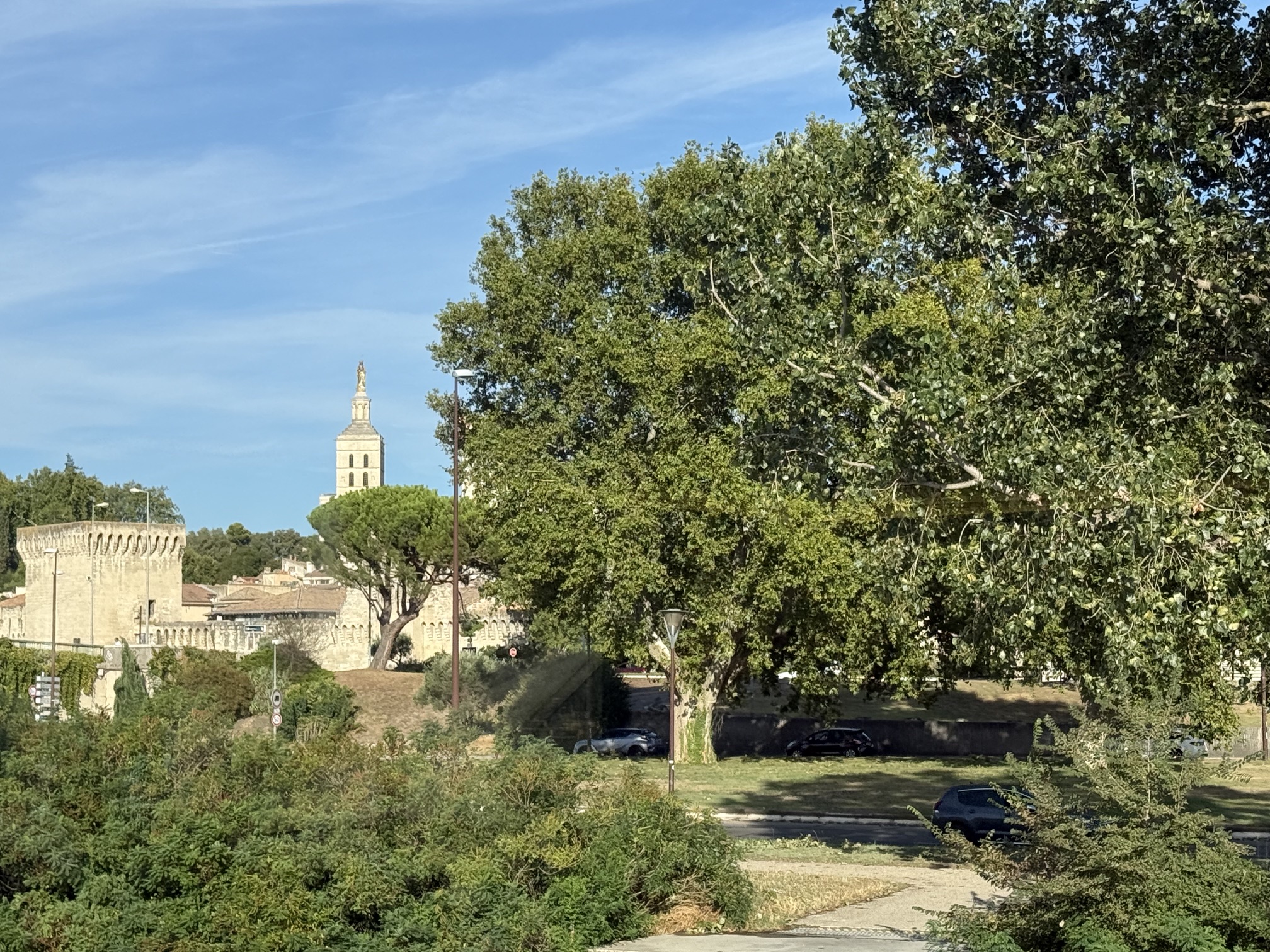
Avignon from the river
And then there’s the Pont Saint-Bénézet—famously celebrated in the folk song Sur le Pont d’Avignon (and described by Mary Stewart above). Though I longed to go up on the bridge, after walking all over Avignon my feet hurt, there was absolutely no shade up there at all, and sadly, it was simply Too Hot.
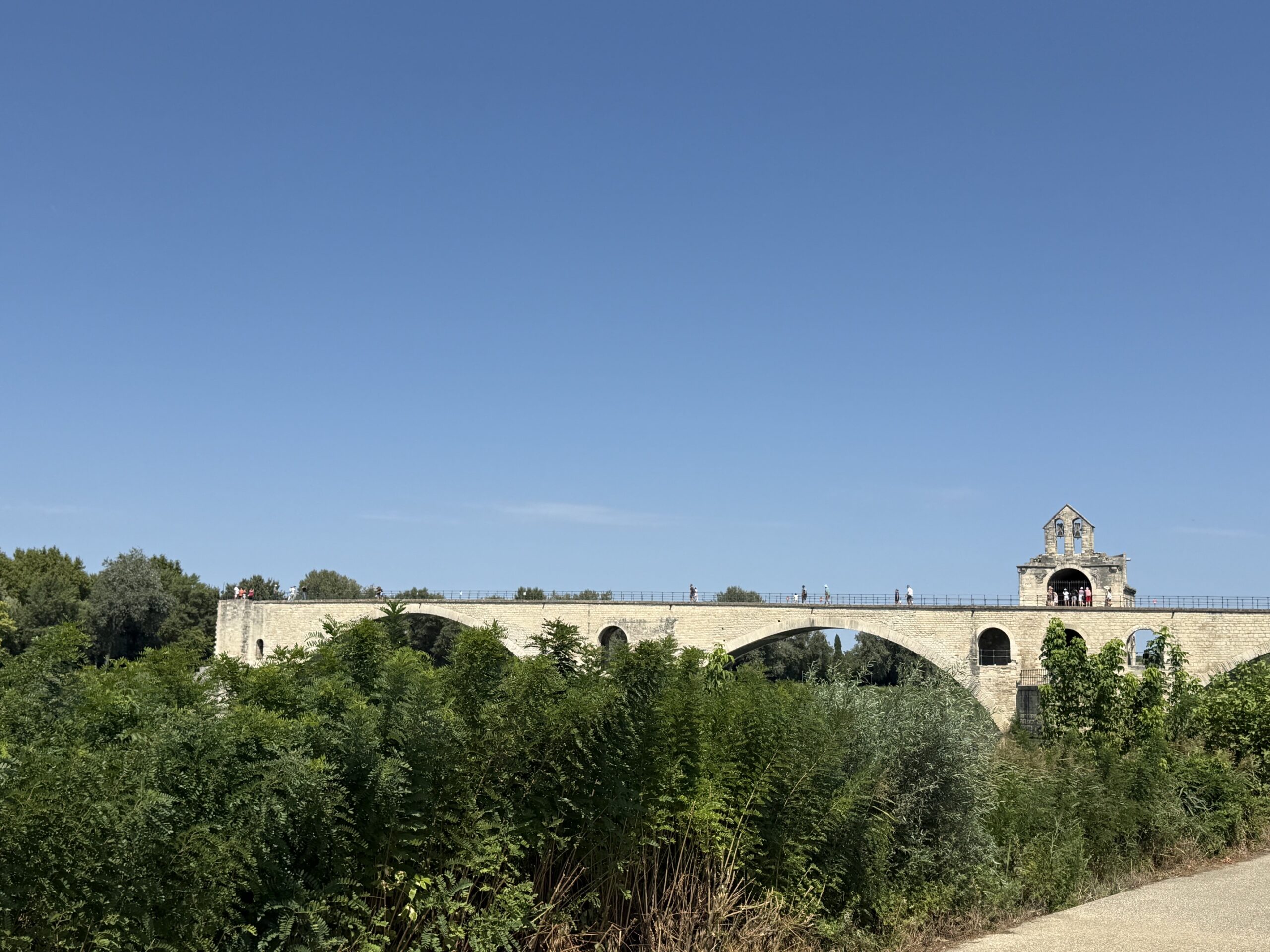
The Pont d’Avignon
Still, there were so many highlights:
The Palais de Papes, dating from the 14th c. when the popes temporarily relocated from Rome to Avignon. Though the papacy resided there for less than a hundred years, the monstrous imposing edifice, now a UNESCO World Heritage site, still stands. So gigantic, it was hard to imagine anyone actually living there. Apparently, it functioned as much as an administrative headquarters for the Catholic Church as a home for the popes; either way it’s an incredible statement of the power of the medieval church. The Grand Chapel, where the popes worshipped, once boasted gorgeous frescoes, sadly destroyed during the French Revolution. I’m still wondering why revolutionaries always seem bent on destroying churches and places of worship, even Roman remains. Maybe it’s a reaction against authority thing—if you hate the king, then you hate God too—? I don’t know, so I’ll have to do some research.
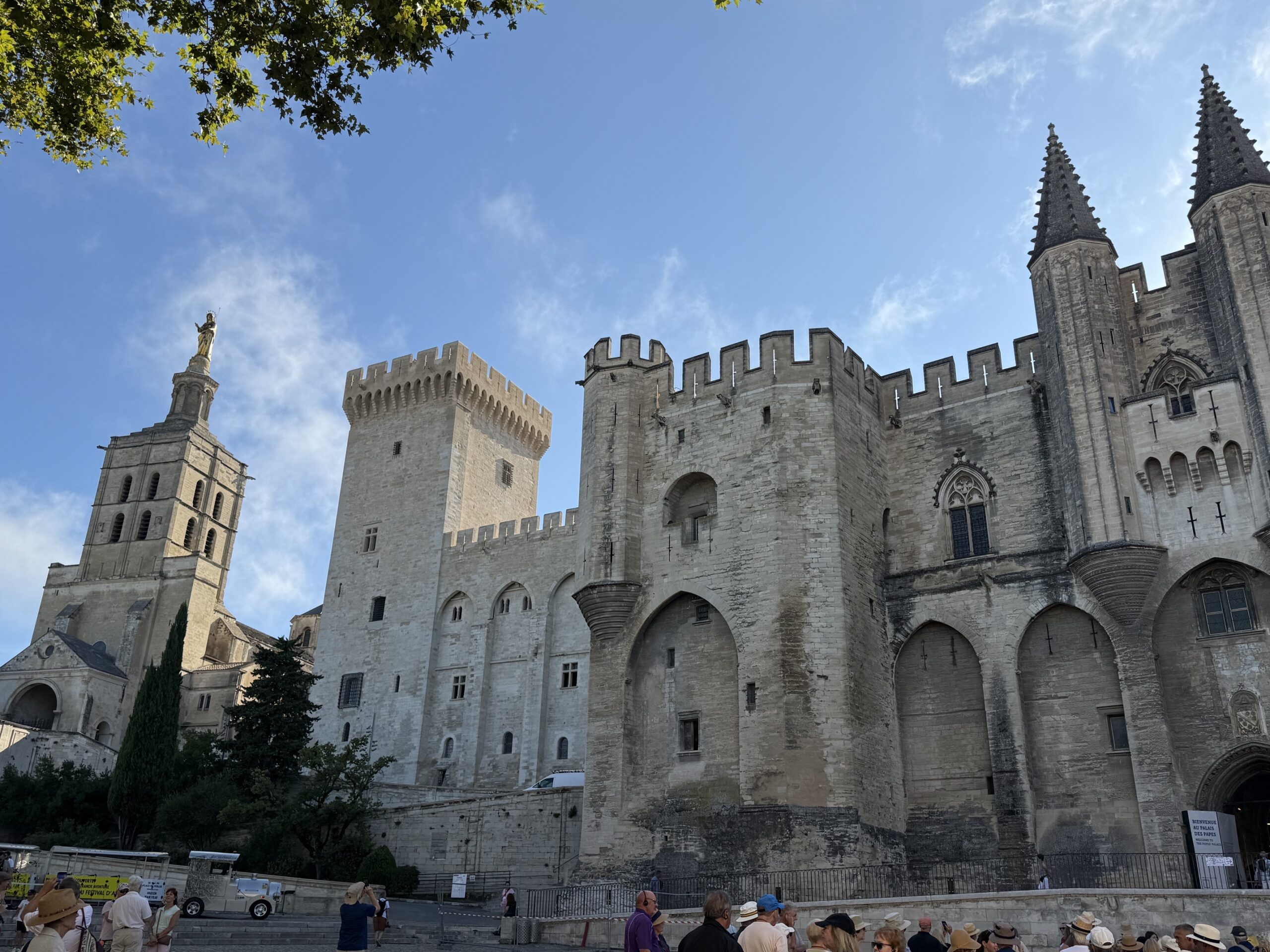
The Palace of the Popes
A glass of thé glacé de menthe at an outdoor café was another revelation. So simple—a mint teabag, simple syrup, sparkling water, and real ICE—so refreshing and delicious. Part of a delicious lunch in an outdoor café in one of the squares of Avignon. Also, gelato—in that heat it revived us more than once.
Another thing that always surprises me about France, especially given its reputation as being unfriendly to Americans, is how fondly and faithfully the French remember the American troops who liberated them from Nazi occupation at the end of WWII. Avignon was liberated on August 25, 1944—and we were delighted to come upon a celebration in the Place de l’Horloge marking that anniversary with a parade of vintage WWII-era jeeps and other vehicles, American flags everywhere, and people dressed in 1940s-era clothing and military uniforms.
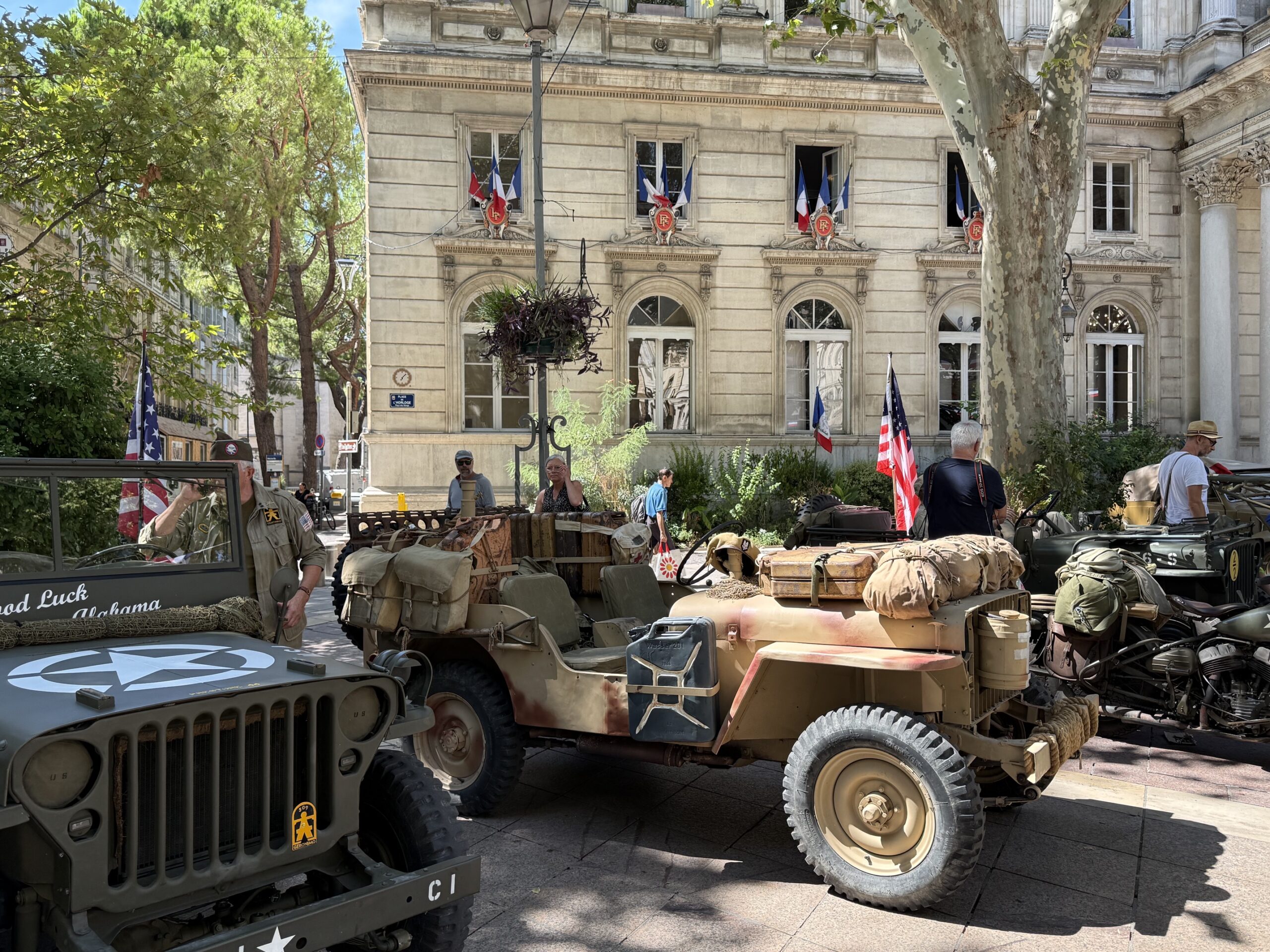
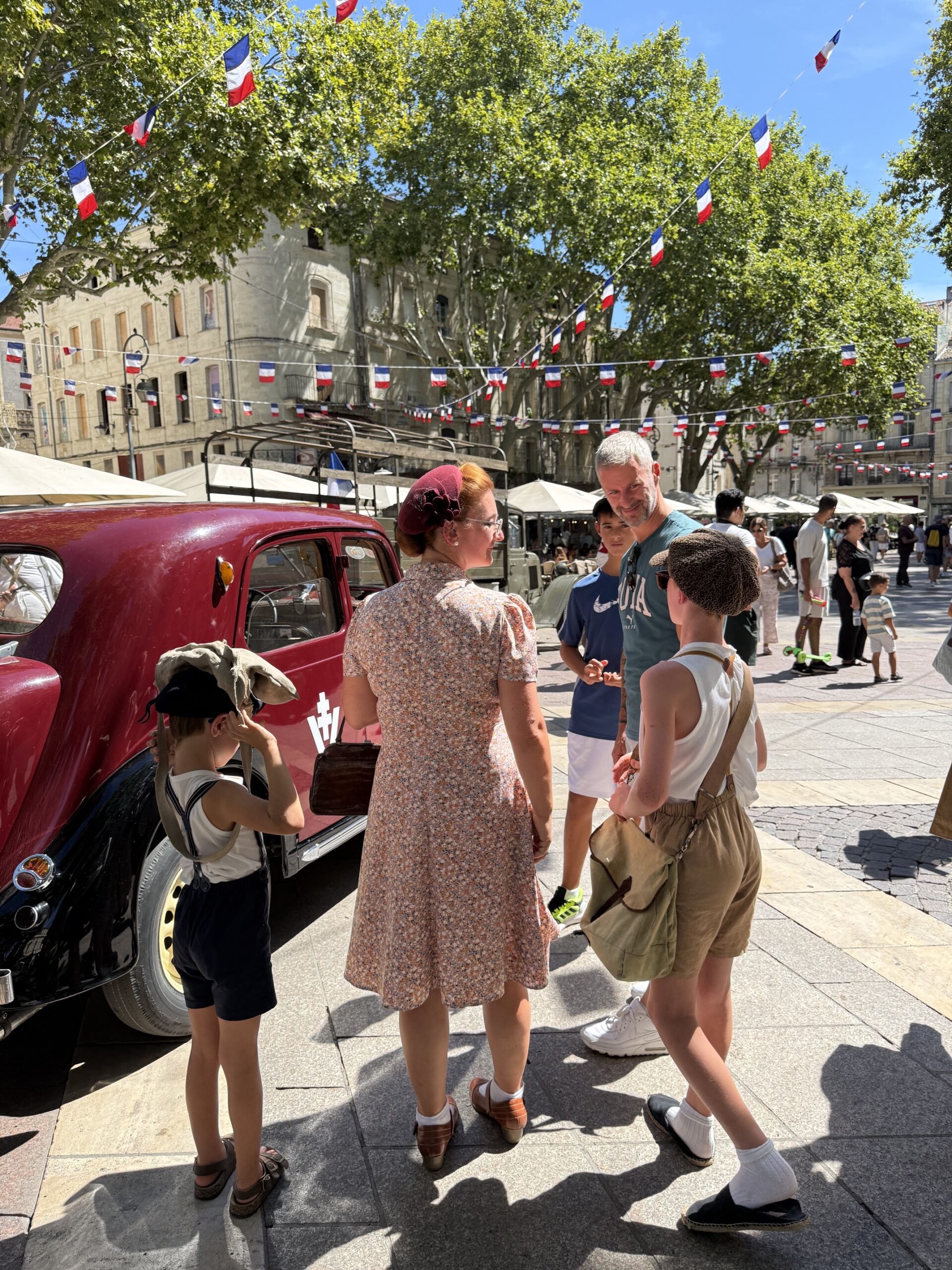
Celebrating liberation in Avignon
Then, there’s the beauty of just being on the Rhône, gliding past villages and churches, farmhouses and vineyards, groves of gray-green olive trees and of course, cypresses, in that craggy, ancient landscape that has survived centuries of war and peace and everyday life.
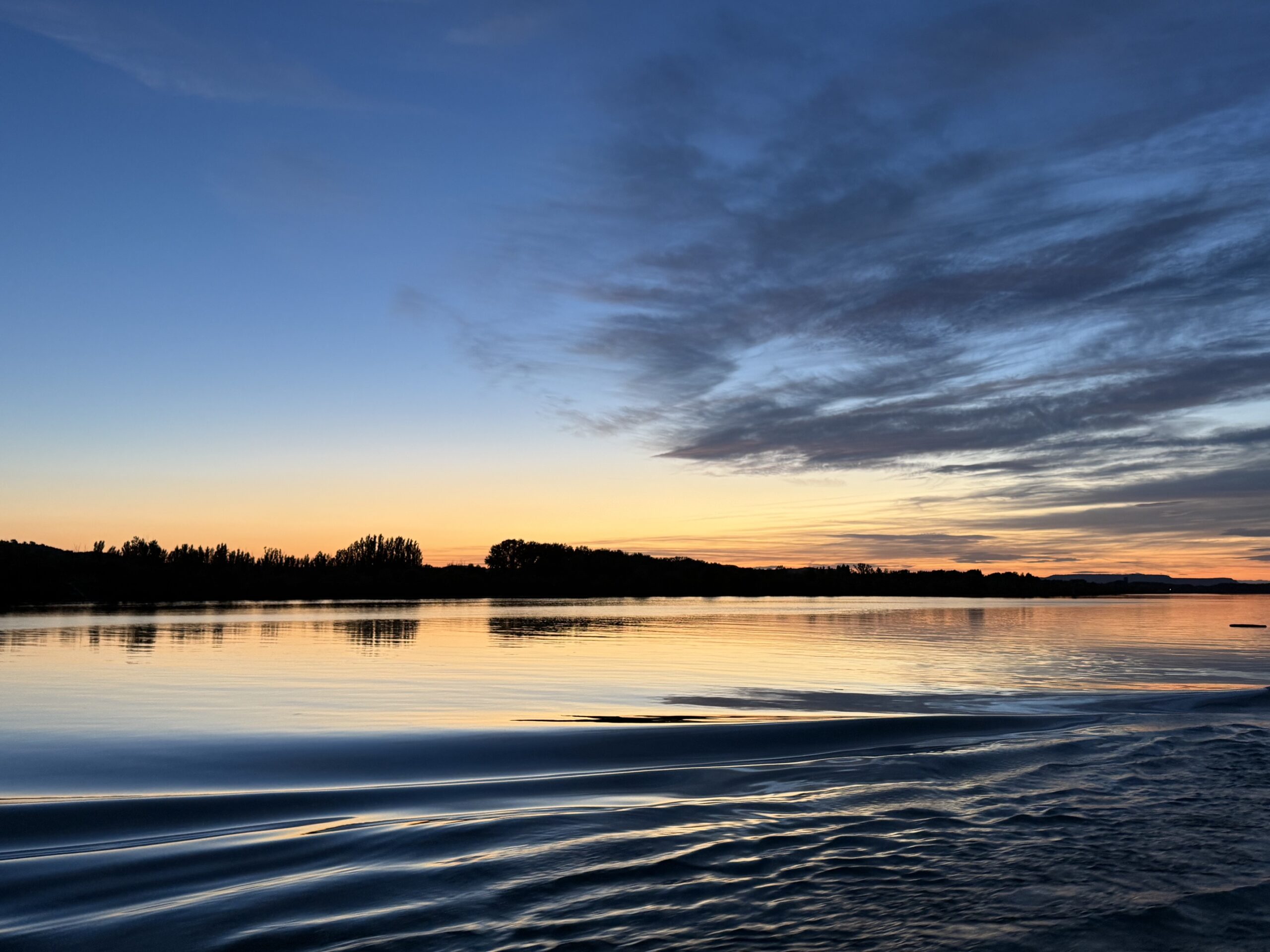
Reflections on the Rhône
And I’m always touched by the peace of ancient churches sanctified by centuries of the devotion of ordinary people.
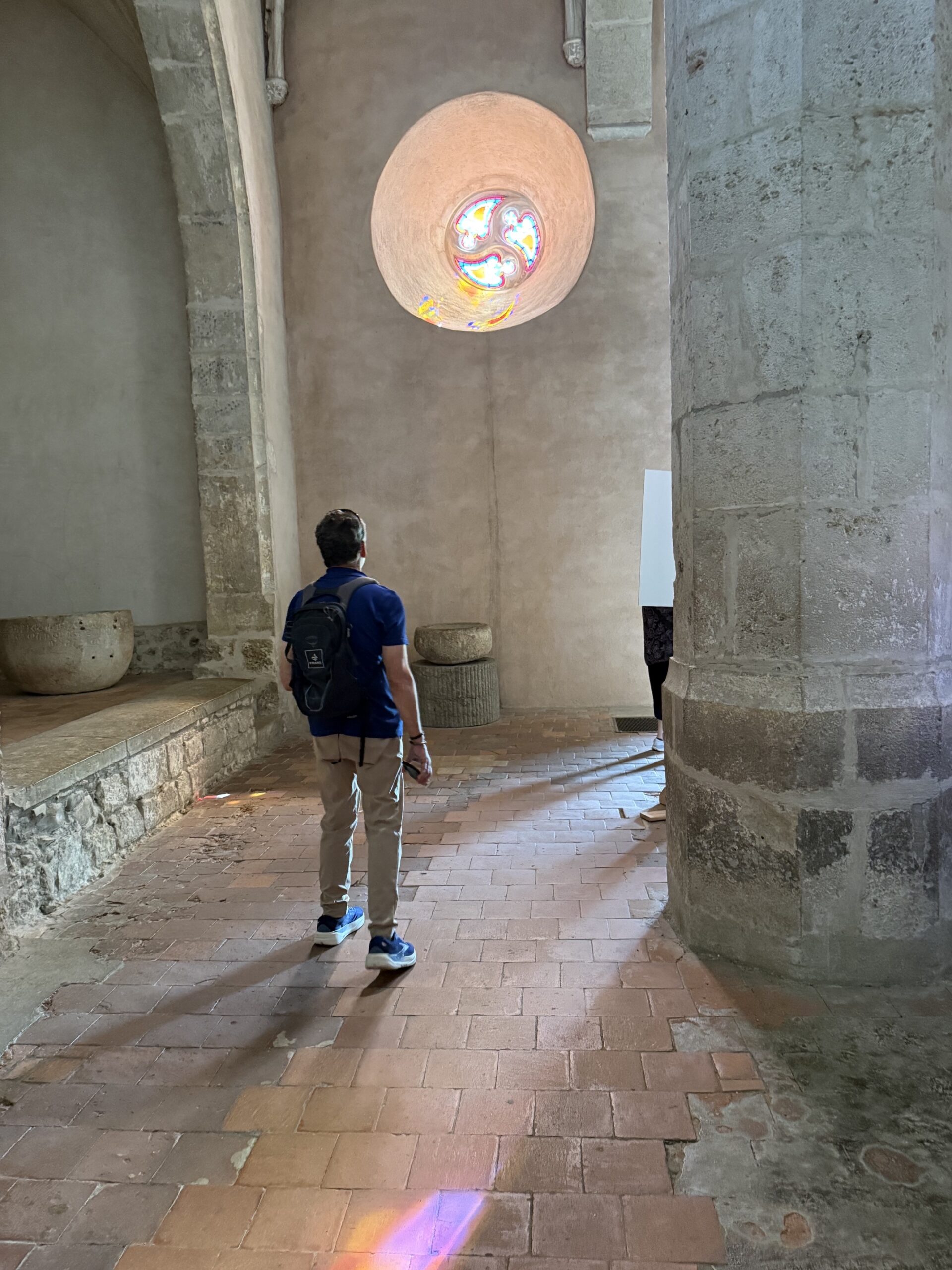
The 15th c. church of Sainte-Marie Madeleine in Pérouges
Closer to home, I just want to note that this week marks the year anniversary of Kurt’s brain surgery. It’s been a year of recovery and healing, and I’m happy to report that he’s doing really well and we are filled with gratitude.
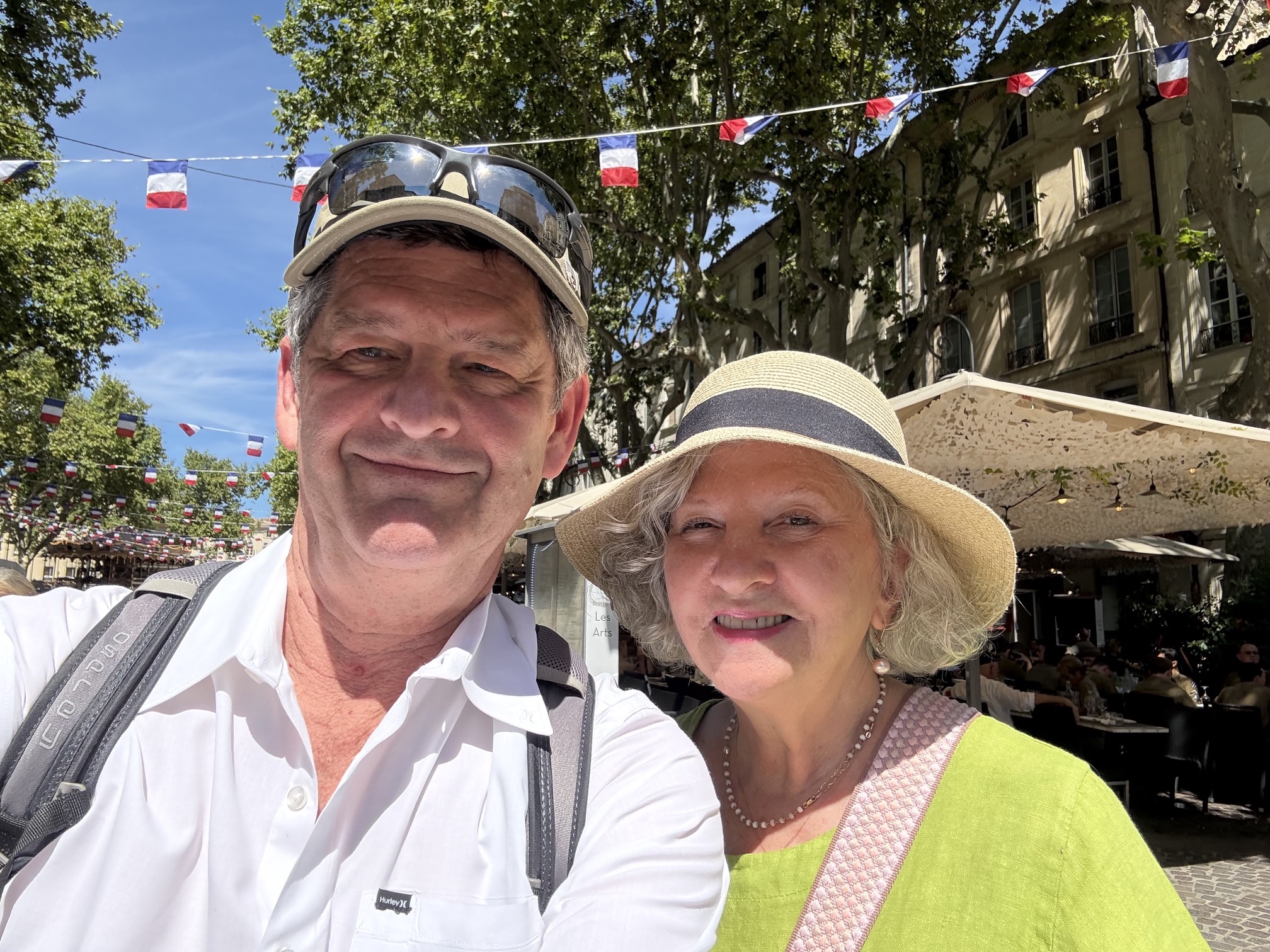
In Avignon
In my next post, I’ll explore Arles, where Van Gogh painted. Till then, take care and Bonne journée!
All photos my own
Leave A Comment